



Description
This document provides a summary of Module 6: Emergency situations and technology (P. 87-102) for Grade 7 Technology, focusing on the needs of people in emergencies, designing emergency meals, specialized clothing, and emergency shelters.
I. The Needs of People in Emergency Situations
- Emergencies are serious, unexpected events that cause damage or loss of life, such as fires, floods, or war.
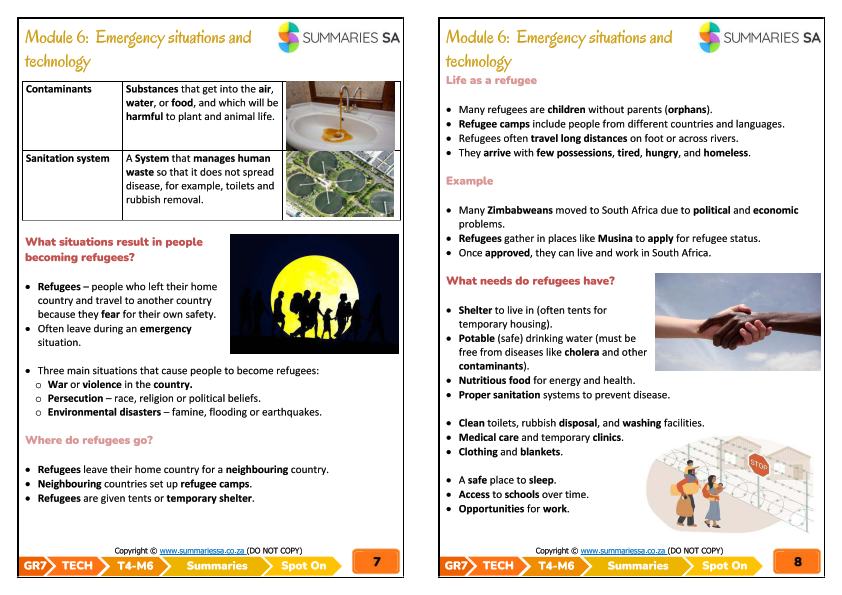
- Refugees are people who leave their home country for safety, often fleeing war, violence, persecution, or environmental disasters (famine, floods, earthquakes).
- Refugee needs include safe shelter, clean drinking water (potable), nutritious food, and good sanitation systems to prevent disease. They also require medical care, clothing, blankets, and access to education and work.
II. Designing an Emergency Meal
- Meals in refugee camps must provide energy and all necessary nutrients.
- A balanced food plate consists of half fruit and vegetables, and half grains and protein, plus a dairy serving.
- Challenges in camps include difficulty obtaining fresh produce, leading to the use of canned or pickled alternatives. Protein is often sourced from beans or lentils, as meat, fish, and dairy are costly and hard to store.
- A daily ration example for one person is 400g wheat or maize, 60g beans/peas/lentils, 25g vegetable oil, 15g sugar, 5g salt, and optionally up to 100g fortified blended food.
III. Specialized Clothing
- Technological advances in textiles protect emergency workers, such as the National Sea Rescue Institute (NSRI) and firefighters.
- NSRI rescue swimmers wear wetsuits made of neoprene, a synthetic rubber foamed with gas bubbles to improve heat insulation and increase buoyancy.
- Firefighter clothing has three layers to protect against heat, flames, and hazardous conditions: an outer shell of Nomex, a moisture barrier, and a thick, quilted thermal barrier.
IV. Emergency Shelters
- Designing an emergency shelter involves investigating indigenous building methods and migrant workers’ techniques in South Africa. It also requires investigating suitable textiles, writing a design brief, sketching ideas, and making a model.


Reviews
There are no reviews yet