


Description
This is a summary of the Grade 8 Natural Sciences Term 1 summaries document, covering Photosynthesis and Respiration, Interactions and Interdependencies, and Microorganisms.
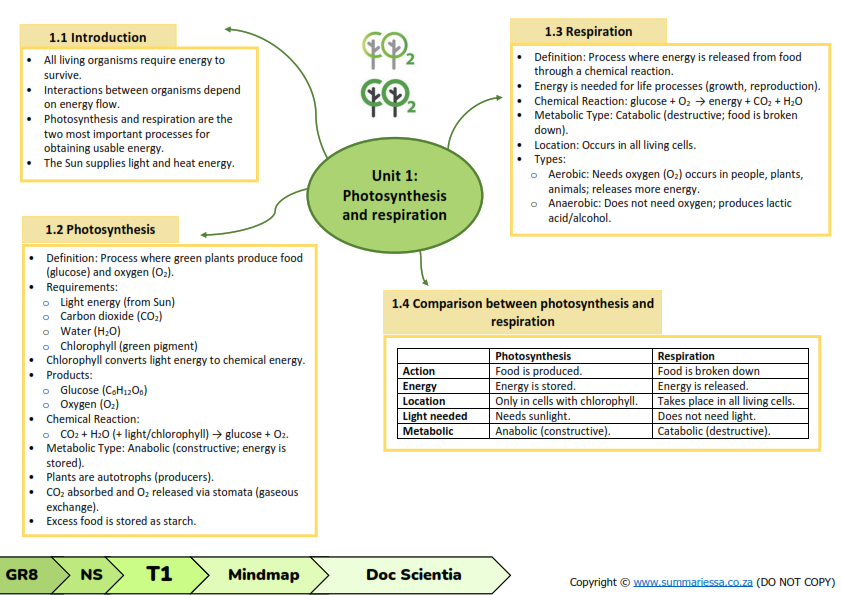
Unit 1: Photosynthesis and Respiration
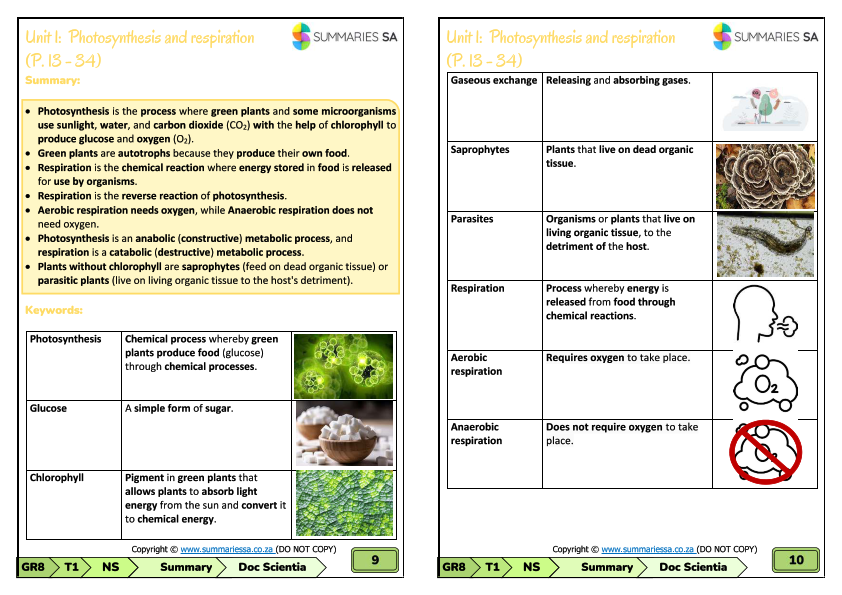
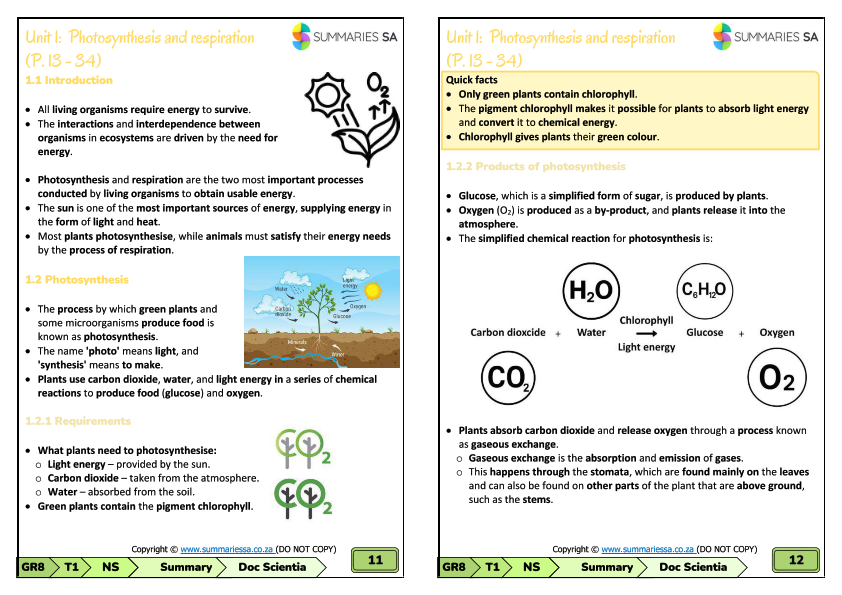
- Photosynthesis is the process where green plants produce glucose (food) and oxygen using sunlight, water, and carbon dioxide with the help of chlorophyll. It is an anabolic (constructive) process where energy is stored.
- Respiration is the chemical reaction that releases energy stored in food for use by organisms. It is a catabolic (destructive) process where food is broken down.
- Types of Respiration: Aerobic respiration requires oxygen, while anaerobic respiration does not.
- The simplified chemical reaction for photosynthesis is the reverse of respiration.
Unit 2: Interactions and Interdependencies (Ecology)
- Ecology is the study of the interaction between organisms and their physical and chemical environment.
- An Ecosystem is an area where living (biotic) and non-living (abiotic) factors interact.
- Symbiosis describes interdependencies between organisms, including:
- Mutualism: Both organisms benefit.
- Commensalism: One benefits, the other is neither harmed nor helped.
- Parasitism: One benefits, the host is disadvantaged or harmed.
- Feeding Relationships categorize organisms as Producers (autotrophs) or Consumers (herbivores, carnivores, omnivores, detritivores).
- Adaptations are structural, functional, or behavioral changes to ensure survival. Examples include xerophytes (dry habitats) and hydrophytes (wet habitats). Animals use Camouflage and Mimicry for protection or hunting.
Unit 3: Microorganisms
- Microorganisms are too small to see without a microscope. The five main types are Bacteria, Viruses, Fungi, Algae, and Protozoa.
- Harmful microorganisms cause diseases like cholera, which is a waterborne disease. Prevention involves hygiene, boiling water, sterilization, and vaccines.
- Useful microorganisms act as decomposers, aid in water purification, are essential for the digestive system, and are used in the production of food and antibiotics.


Reviews
There are no reviews yet